
You can move from SEO 92 to 100 in Lighthouse without tricks. That is not a marketing claim. It is realistic.
If your WordPress site is missing meta descriptions, Lighthouse will deduct points in the SEO section. Add proper meta descriptions, rerun the audit, and the score can move to 100. Nothing artificial. No keyword stuffing and no manipulation needed. Just completing what Lighthouse expects: a valid HTML <title> tag and a valid meta description.
WordPress Already Handles Most Technical SEO
WordPress itself already handles most of what Lighthouse audits. A clean WordPress installation generates semantic HTML. It outputs a proper <title> tag. It creates crawlable links. It does not block indexing by default. Core Web Vitals are usually more dependent on theme quality and hosting than on WordPress itself. In other words, out of the box, WordPress covers a large portion of technical SEO basics reasonably well.
Where WordPress is silent is the meta description.
By default, WordPress does not automatically generate a meta description tag for posts and pages. Some themes try to improvise. Some SEO plugins add custom fields. Some developers hardcode descriptions into templates. But WordPress core does not create meta descriptions automatically.
So if you publish content without filling that field, the page simply has none. Lighthouse sees that immediately. It flags “Document does not have a meta description.” Your SEO score drops.
I saw that many times when I started a new wordpress blog. Performance was perfect. Accessibility was perfect. Best Practices were perfect. But SEO score was never 100.
If you care about technical SEO, you know that number means something small is wrong. Lighthouse doesn’t randomly subtract points. It checks structure. It checks fundamentals. It checks whether your document has a title element. It checks whether your page is crawlable. And it also checks something painfully simple: does the document have a meta description?
Mine didn’t.
And that’s where AutoDescriptor WP plugin was born.
The Quiet SEO Problem Most WordPress Sites Have: Missing Meta Descriptions
Nobody forgets meta descriptions on purpose. Every WordPress user knows they matter. Every SEO guide mentions them. Every optimization checklist includes them.
But in real life, publishing doesn’t happen inside checklists. You write a blog post quickly. You import content from an old CMS. You restore articles from the Wayback Machine. You migrate between themes or SEO plugins.
In those moments, meta descriptions disappear quietly. The page still loads and the URL still works and Google still indexes it. Nothing explodes.
But Lighthouse notices. And Google notices too. And eventually, your SEO score reflects that small omission.
SEO 92 instead of 100, yes I know, nothing special. A missing meta description isn’t dramatic, but it signals that your on-page SEO is inconsistent. And inconsistency scales.
What Really Happens Without a Meta Description
When a page lacks a meta description, Google tries to generate a meta description automatically based on the page content. That sounds helpful, but is in fact unpredictable. Search engines extract fragments of text based on relevance, not clarity.
Sometimes Google pulls the opening sentence, even if that sentence was meant to be a hook rather than a summary. Sometimes it extracts navigation labels or unrelated fragments. Or it truncates mid-thought.
That snippet becomes your search preview. That snippet is what users scan in the search engine results page. Before they see your content, before they judge your authority, they read that description.
If the description is clean, concise, and aligned with search intent, the click feels safe. If the description feels random or incomplete, the user hesitates.
Click-through rate depends on clarity and not just ranking.
Meta descriptions do not directly increase rankings, but they influence organic CTR, user engagement, and perceived relevance. They shape how your content appears in Google Search. They determine whether your page looks intentional or accidental.
And when you run a Lighthouse SEO audit, the absence of a description is visible immediately.
Lighthouse Doesn’t Care About Excuses
Lighthouse 13 checks technical SEO basics with mechanical precision. It verifies that your page isn’t blocked from indexing. It confirms that your document has a valid <title> tag. And it confirms that your document has a meta description.
If it doesn’t, your SEO score drops. That’s how my 100 became 92.
Nothing else changed. Core Web Vitals were excellent. Largest Contentful Paint was fast. Cumulative Layout Shift was zero. Accessibility passed. Structured data was valid. The only issue was missing meta descriptions.
That moment clarified something important. Technical SEO is not only about speed optimization or schema markup, but about structural discipline. It is about making sure every page follows baseline best practices.
AutoDescriptor WP plugin solves exactly that structural gap.
The Real Pain: Scaling WordPress Without Losing Metadata
When you have ten pages, you can manually write every meta description. But once your WordPress site grows to hundreds of posts, writing meta descriptions manually becomes unrealistic. That’s where an automatic meta description WordPress plugin becomes essential.
Content management systems make publishing easy. But metadata often becomes fragile during growth. Bulk imports lose custom fields. Plugin conflicts remove SEO settings. Page builders override templates. Archived content reappears without proper tags.
Over time, you end up with:
• Inconsistent meta descriptions
• Pages without search summaries
• Lower Lighthouse SEO scores
• Messy search engine snippets
You may not notice immediately. Traffic might still flow. Rankings might not collapse overnight.
But the foundation becomes unstable.
AutoDescriptor acts to make the foundation stable again like structural reinforcement. If a page has no meta description, it generates one automatically using the page content. If you already wrote a custom description, it respects it completely.
No overwriting. No rewriting. And no interference with your existing SEO plugin.
It simply ensures that no page goes live without a description.
Why a Good Meta Description Actually Matters
Let’s go deeper than audits and scores.
A meta description is your micro-pitch inside Google search results. It’s your short explanation. It sets expectations. It filters the wrong clicks and attracts the right ones.
When someone searches for a topic, they don’t read full articles first. They scan titles and descriptions. They compare tone, clarity, and specificity.
A strong description increases perceived relevance. It improves organic click-through rate. It reduces bounce caused by mismatched expectations. It strengthens the connection between query intent and content value.
Search engines may rewrite snippets, yes. But when you provide a clear meta description aligned with the keyword theme and search intent, Google often uses it.
Providing nothing leaves interpretation to algorithms. Providing structure gives direction.
AutoDescriptor plugin ensures every page participates in that process.
Why You Need a WordPress Plugin for Automatic Meta Descriptions
If you search for “WordPress plugin automatic descriptions”, you’ll find complex SEO suites. But the real need is simpler. You need a lightweight WordPress plugin that can generate meta descriptions automatically when they are missing. You need something that protects your technical SEO without adding more configuration.
Before and After
Before AutoDescriptor wordpress plugin, my Lighthouse SEO score sat at 92. That number reflected small omissions across multiple pages.
After installing the plugin and letting it populate missing descriptions, I ran the audit again.
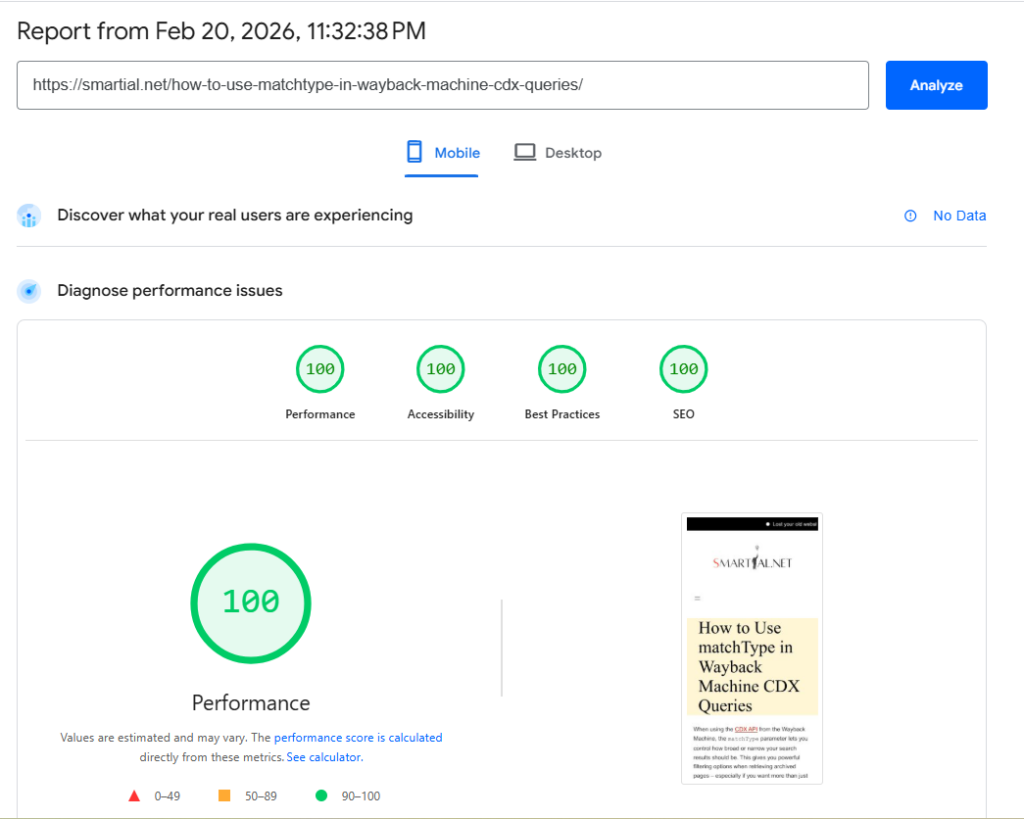
SEO: 100.
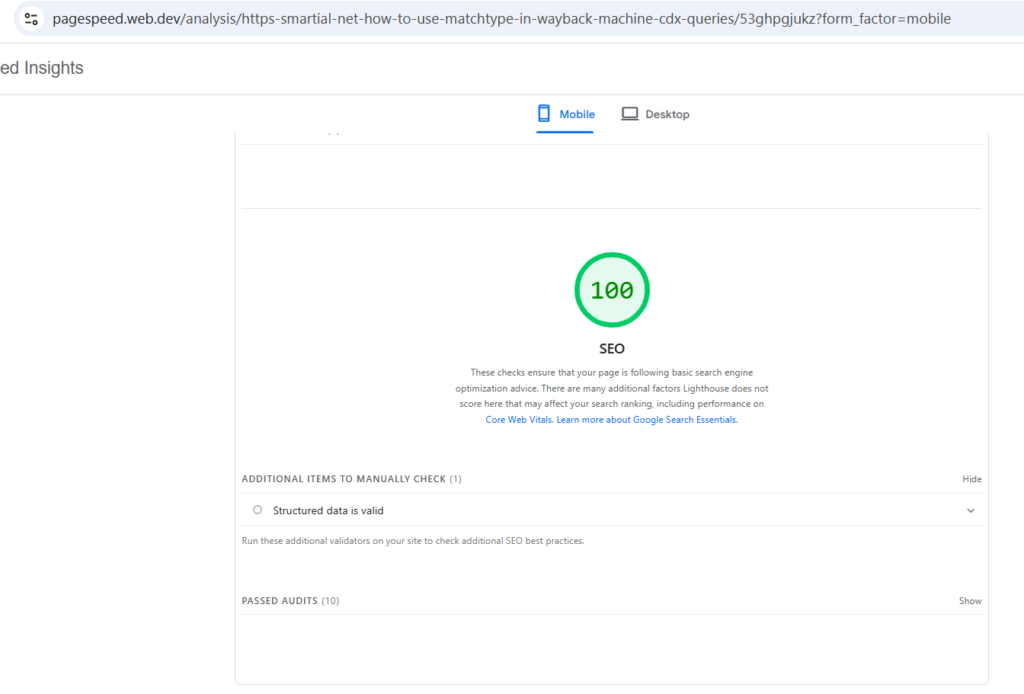
The content was identical. The hosting was identical. The performance metrics were identical. The difference was metadata completeness.
That’s the kind of improvement that doesn’t rely on backlinks, keyword stuffing, or technical tricks. It relies on consistency.
Bulk Meta Description WordPress Plugin That Doesn’t Interfere with Other SEO Plugins
There are many SEO plugins for WordPress. Some handle schema markup, XML sitemaps, Open Graph tags, canonical URLs, robots directives, and structured data validation.
AutoDescriptor does not try to replace them. Its role is specific: guarantee that every published page has a meta description. That focus keeps it lightweight. It avoids feature overload and integrates cleanly with existing SEO workflows.
You can still optimize individual descriptions manually for high-priority pages. You can still refine keyword targeting and search intent alignment.
But you no longer risk publishing pages without basic metadata.
The Deeper Benefit: Structural Confidence
When your site consistently includes:
• Title tags
• Meta descriptions
• Canonical URLs
• Crawlable internal links
• Valid structured data
You build systemic trust. For search engines, and for yourself too.
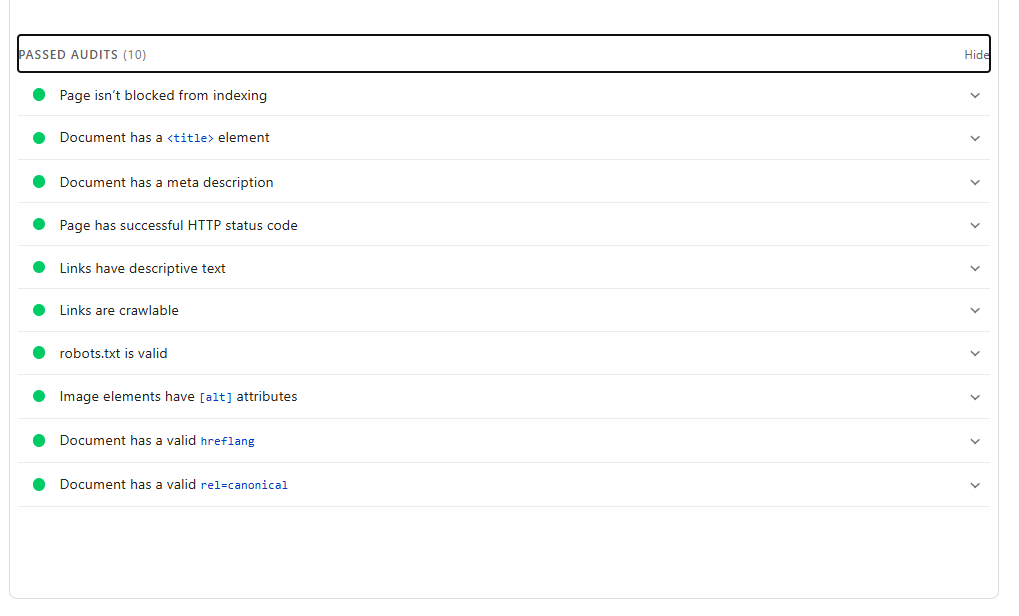
Running Lighthouse becomes routine rather than stressful. Technical audits become confirmations instead of surprises. AutoDescriptor plugin removes an entire class of small but compounding SEO errors. It protects the baseline. And in technical SEO, baseline is important.
Your Are Not Gaming Google
It’s easy to think of SEO tools as ranking manipulation. That’s not what this is.
A wordpress plugin creating automatically meta descriptions doesn’t promise higher rankings. It doesn’t generate artificial signals. It doesn’t optimize keyword density.
But it ensures your content has a clear summary in the HTML metadata layer.
It ensures that when Google evaluates your page, it sees completeness and that when Lighthouse audits your SEO, it finds no missing descriptions.
It ensures that when users see your page in search results, they see a coherent explanation. That’s respecting the system.
Why Lighthouse SEO Score 100 Matters
When Lighthouse shows SEO 100, it means you are not leaking points through avoidable mistakes. It also means your technical SEO fundamentals are intact.
That doesn’t guarantee rankings. But it guarantees that you are not losing visibility because of something trivial.
The jump from 92 to 100 may look small numerically. Structurally, it represents consistency across your entire content library.
And in the long run, stable foundations outperform flashy shortcuts every time.
f you too run a WordPress website and want to generate meta descriptions automatically, you don’t need complexity. You need consistency. An automatic meta description WordPress plugin like AutoDescriptor ensures that every page has a proper SEO description, improving Lighthouse SEO scores, strengthening on-page optimization, and protecting your search visibility over time.
Leave a Reply